Cowboy Space, founded by Robinhood co-founder Baiju Bhatt, has unveiled its Big Iron rocket as part of plans to develop an orbital AI computing network called Stampede. The company aims to deploy approximately 20,000 satellites, each designed to provide around one megawatt of computing capacity. The 282-foot rocket is targeting its first launch in December 2028. Its proposed architecture would convert the upper stage into an orbital data centre, while the first stage is intended to be reusable.
Cowboy Space Unveils Big Iron Rocket to Launch 20,000 AI Data Centres in Space
The California-based firm aims to create a constellation of 20,000 orbital AI data centres, with the first Big Iron rocket launch scheduled for December 2028.
Cowboy Space’s Big Iron rocket plans represent an ambitious bid to take artificial intelligence computing infrastructure to low Earth orbit. The company is targeting its first launch in December 2028.
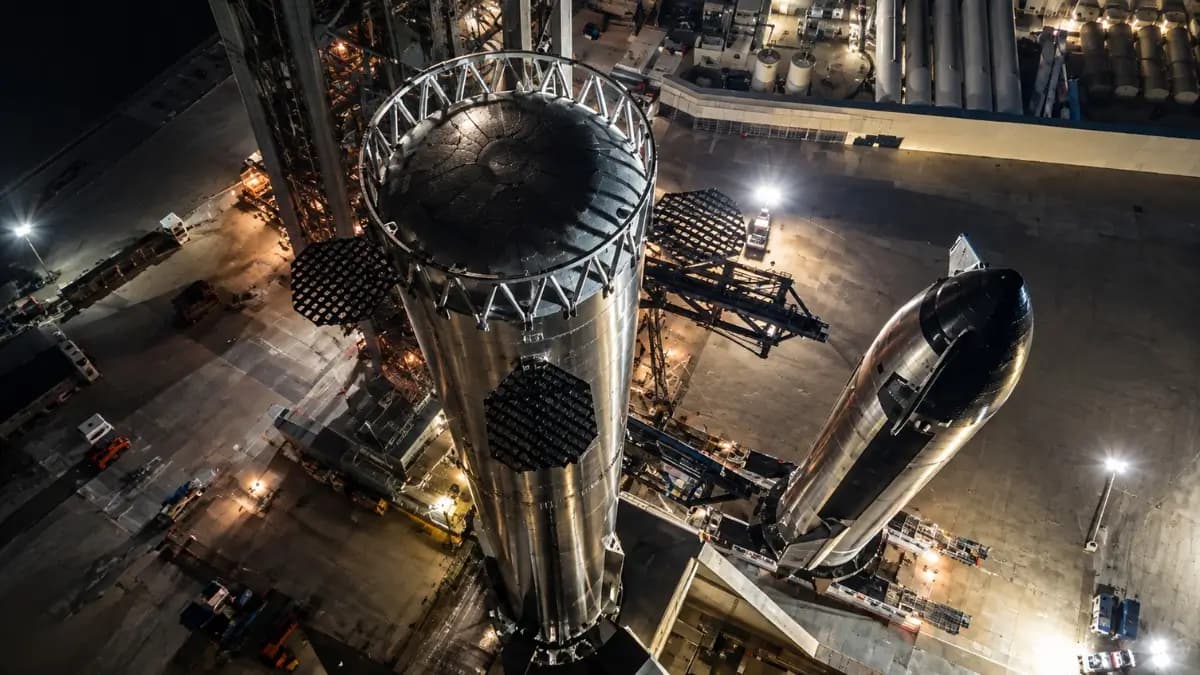
Robinhood co-founder Baiju Bhatt’s company on Monday, October 26, unveiled the 282-foot (86-metre) stainless-steel rocket at its Big Sky Rising event in Palo Alto, California.
Cowboy Space plans to build its own satellites and launch them on its own rocket to create a network of computing in orbit called Stampede that will consist of about 20,000 satellites.
How the Cowboy Space Big Iron Rocket Will Work
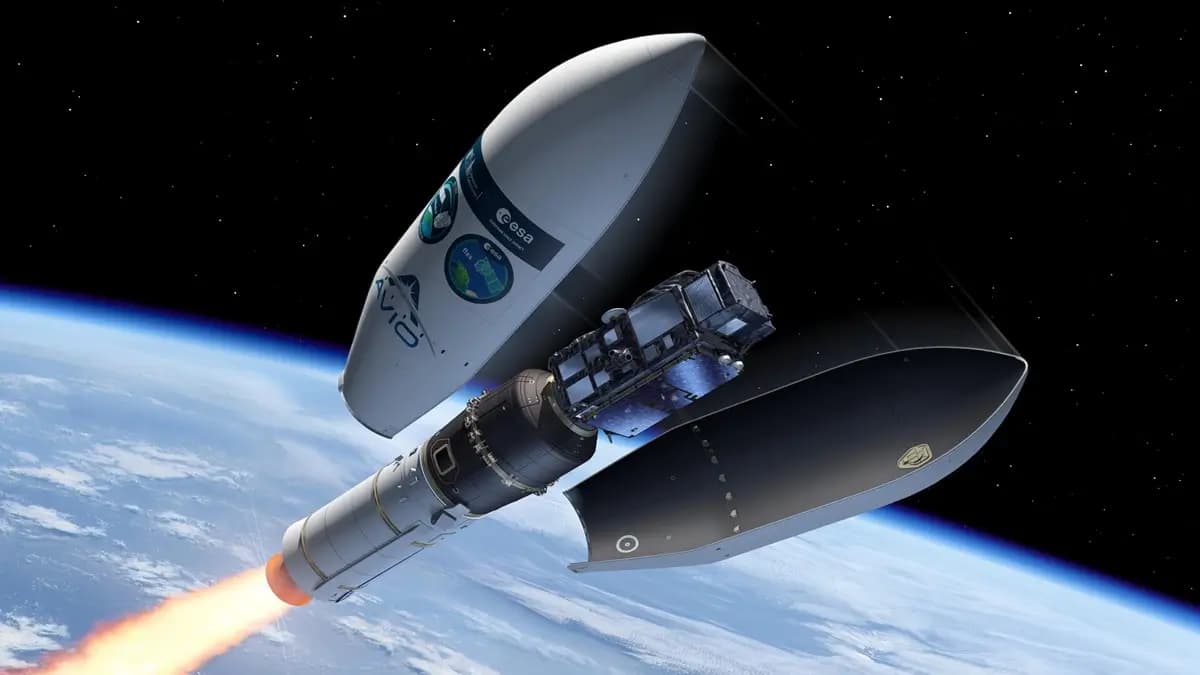
The Big Iron system marries a rocket with an orbital data centre in one vehicle, with its upper stage intended to stay in space to serve as a satellite once deployed.
The approach is a fundamentally new direction for modern rocketry, Bhatt said. Instead of throwing away the upper stage of the two-stage rocket after reaching orbit, it would be converted into the satellite.
The rocket will be 4.7 meters (15.4 feet) across, with nine Clydesdale engines in the first stage and one engine in the upper stage.
The engines will use liquid oxygen and liquid methane, a propellant combination known as methalox, which is also utilised by SpaceX's Raptor engines that power its Starship launch vehicle.
The first stage is intended to be reusable, and an animation shown during launch depicted the booster returning to a ship at sea, much like recovery missions for the SpaceX Falcon 9.
The satellite, which will orbit the Earth, will weigh about 33,000 pounds (15,000 kilograms) and will be some 433 feet (132 meters) long when its solar panels are deployed.
Stampede Constellation Targets One Megawatt of Computing Power
According to Bhatt’s presentation, each Big Iron satellite will feature five racks of graphics processing units (GPUs) that will deliver around one megawatt of computing power.
Its payload fairing that protects the satellite during launch will become a radiator to dissipate heat from the onboard computing hardware in space.
Cowboy Space’s planned spacecraft would be much larger than the imperial-class Starlink AI data centre satellites that Bhatt said SpaceX is developing, with a solar wingspan of 246 feet (75 meters) and around 250 kilowatts of computing capacity.
It will take something like 20,000 launches to make the Stampede constellation, since each Starship rocket can only loft one data-centre satellite into orbit.
The company also expects to have to carry out thousands of extra launches every year to keep the constellation at its planned size, so the frequency of launches is key to its long-term operational plans.
Also Read: Donald Trump Credits Endorsement as Netanyahu Bloc Falls Short of Majority
Big Iron Launch Date and Commercial Plans
Cowboy Space plans to launch several times a day from what it calls trailheads. Each complex could house four active launch mounts, though the locations of these have not been disclosed by the company.
The company also plans to offer commercial launch services through its Big Iron Express, enabling customers to launch payloads into space beyond the launches for its own computing constellation.
But the first flight is still years away. Cowboy Space, the power-beaming company that in 2024 took over from Aetherflux, is still developing and testing its Clydesdale engine.
The December 2028 target is “ambitious and not guaranteed,” Bhatt said. “There are a lot of developments that need to happen before the rocket can fly.”
Reason-1 Satellite Begins Cowboy Space's Orbital Journey
Cowboy Space’s only space hardware asset is the Reason-1 satellite, which launched Oct. 1 on SpaceX’s Transporter-18 rideshare mission.
Reason-1, the company said in a Sept. 28 post on X, will demonstrate power beaming, in which a high-power laser is used to transmit energy from low Earth orbit to a receiver on the ground.
The company believes that the mastery of optical systems between orbit and Earth is a key step on the road to space-based data centres. The next steps for the project will be grounded in engine testing, launch infrastructure, and successful orbital demonstrations, according to Sprouts News.