Hyderabad-based space technology startup TakeMe2Space plans to launch two AI-enabled satellites in 2028 as part of its proposed MOI orbital data centre constellation. The spacecraft are expected to process Earth observation data in orbit, reducing the need to transmit large volumes of raw imagery to ground stations. Each satellite is planned to weigh about 100kg and carry Nvidia Thor GPUs, onboard storage and multispectral imaging equipment. The mission is expected to fly on SpaceX’s Falcon 9 through a commercial rideshare deployment into Sun-synchronous orbit.
TakeMe2Space Orbital Data Centre Mission Set for SpaceX Falcon 9 Launch in 2028
Hyderabad-based space technology startup TakeMe2Space is taking a first step toward an orbital data centre and intends to launch the first networked data centre mission from India in 2028 on SpaceX’s Falcon 9 with two AI-enabled satellites to enable in-orbit data processing and Earth observation.
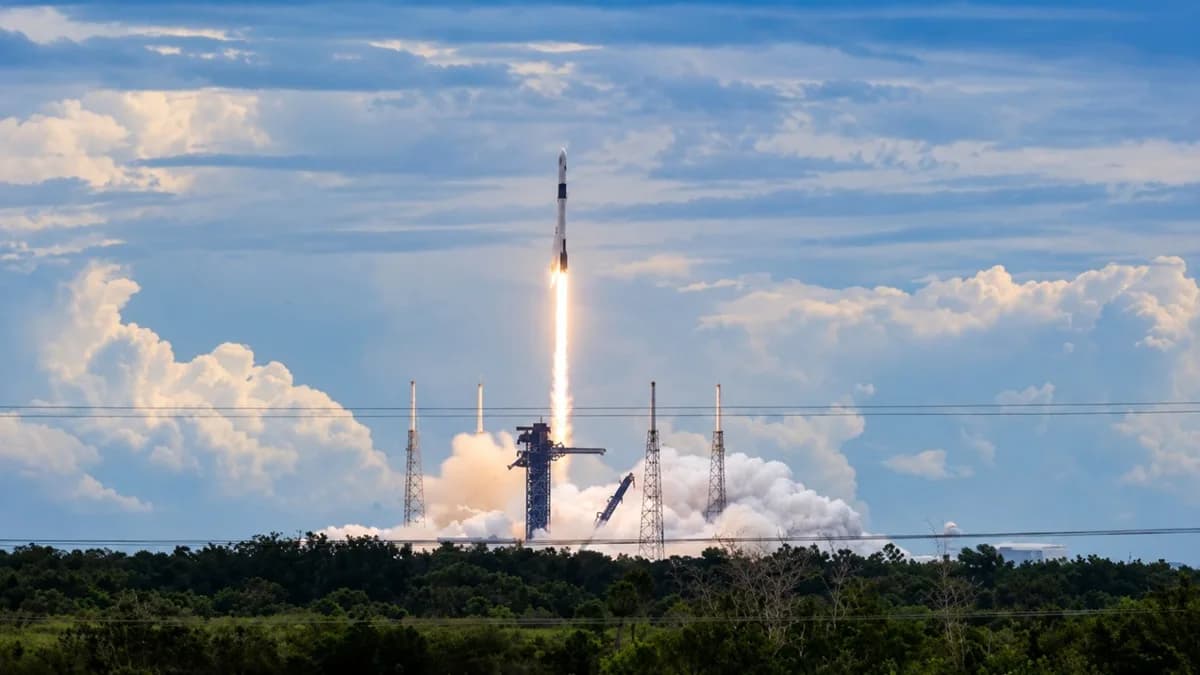
SpaceX’s Falcon 9 rocket will launch TakeMe2Space’s orbital data centre mission in 2028, a major step toward India’s growing private space technology industry.
The Hyderabad-based startup plans to launch two 100-kilogram satellites as part of the MOI constellation, which the company describes as India’s first networked orbital data centre mission.
Each satellite will have 10 Nvidia Thor GPUs, 100 terabytes of onboard storage, a one-metre multispectral imaging system and about 1.5 kilowatts of power generation capability, the company said.
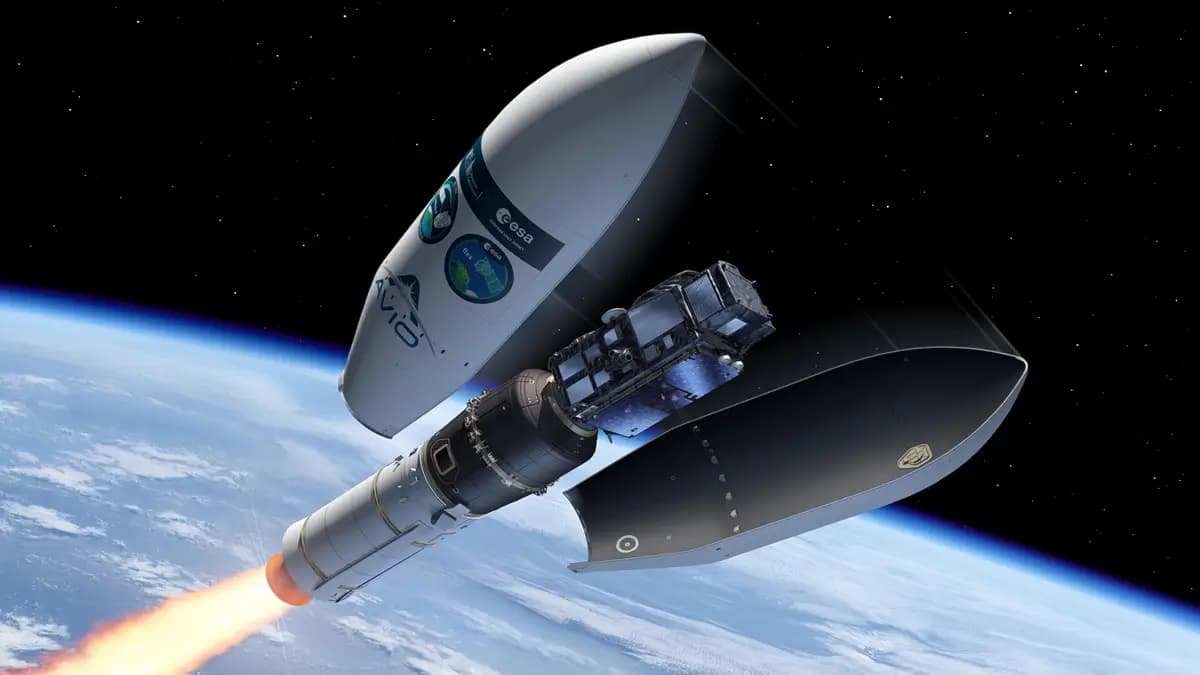
The satellites are planned to be launched onboard the Waymaker-2 rideshare mission into a Sun-synchronous orbit at an altitude of around 500 kilometres above the surface of the Earth.
The launch capacity is secured with Paris-based RIDE! Space in partnership with SEOPS, allowing the spacecraft to join a larger commercial rideshare deployment on Falcon 9.
MOI Programme Advances After Earlier Setback
The announcement follows TakeMe2Space’s MOI-1a mission, slated for October 1, 2026, aboard SpaceX’s Transporter-18 mission, and MOI-1b mission on ISRO’s Small Satellite Launch Vehicle.
The latest progress by the company follows the loss of its MOI-1 satellite during the PSLV-C62 launch failure in January 2026, a setback that temporarily halted its development roadmap.
The startup successfully demonstrated its PowerBank-50 satellite battery technology earlier this year during Skyroot Aerospace's Vikram-1 launch on July 18, which boosted confidence in its space-based systems.
The upcoming constellation will demonstrate technology for future orbital data centre spacecraft and distributed computing networks, said TakeMe2Space Founder and Chief Executive Officer Ronak Kumar Samantray.
The mission is to demonstrate that orbital computing can work at a commercially meaningful scale, with high-performance processing, sophisticated imaging capabilities and inter-satellite communication infrastructure, said Ronak Kumar Samantray.
A key feature of the mission is the use of optical inter-satellite links, which allow the two spacecraft to share workloads and data and to work as a distributed computing platform.
Also Read: Oil Prices Rise After Trump Rejects Iran Strait of Hormuz Proposal
In-Orbit AI Processing and Earth Observation Capabilities
The satellites will work in the opposite way, processing Earth observation data onboard instead of downlinking huge amounts of raw imagery to ground stations, using the OrbitLab platform from TakeMe2Space.
The platform supports onboard analytics (with selective data transmission), artificial intelligence workloads and automated processing functions that reduce bandwidth requirements and operational delays.
The company said end users could get processed outputs, such as flood maps, ship-count assessments and crop-stress analysis, instead of full sets of images.
The company's earlier missions were about showing that computing infrastructure can work in space, and the next constellation is about validating commercially viable orbital computing, said Ronak Kumar Samantray.
“The mission is a new category of rideshare payload defined by computational capability, not just traditional spacecraft hardware,” said RIDE! Space CEO Valentin Benoit.
Indigenous Space Technologies Support Precision Operations
The mission will also have an attitude determination and control architecture indigenously developed in India, using indigenously developed reaction wheels, star trackers and fine sun sensors.
In June, TakeMe2Space announced the StarSense star tracker, one of the technologies included, with funding from the Technology Adoption Fund of the Indian National Space Promotion and Authorisation Centre.
The system is engineered to provide the exacting pointing accuracy needed for sophisticated imaging operations and next-generation compute-intensive orbital applications, the firm said.
The TakeMe2Space orbital data centre mission underscores the rising interest in space-based computing, artificial intelligence and data processing technologies as India’s commercial space ecosystem continues to grow. Sprouts News understands the mission could be a first demonstration that orbital infrastructure could be a complement to terrestrial data systems.
With several launches in the pipeline before 2028 and private companies and launch providers working together more and more, TakeMe2Space’s roadmap is a microcosm of the larger momentum across India’s fast-evolving spacetech industry. Future mission results will be closely watched by investors, regulators, and commercial space stakeholders worldwide.