SpaceX's Starship Flight 15 achieved a historic milestone on November 14, 2026, when its upper stage returned from orbit and was caught by the launch tower at Starbase, Texas. The mission launched on November 13 and successfully deployed 26 Starlink V3 satellites. However, the Super Heavy booster abandoned its planned tower catch and was destroyed over the Gulf of Mexico. SpaceX is investigating the booster recovery failure, while the upper-stage catch marks significant progress towards full rocket reusability.
SpaceX Starship Test Flight 15 Ends With Booster Explosion During Recovery Attempt
SpaceX’s 15th Starship test flight from Texas successfully deployed more Starlink satellites, but could not recover both rocket stages.
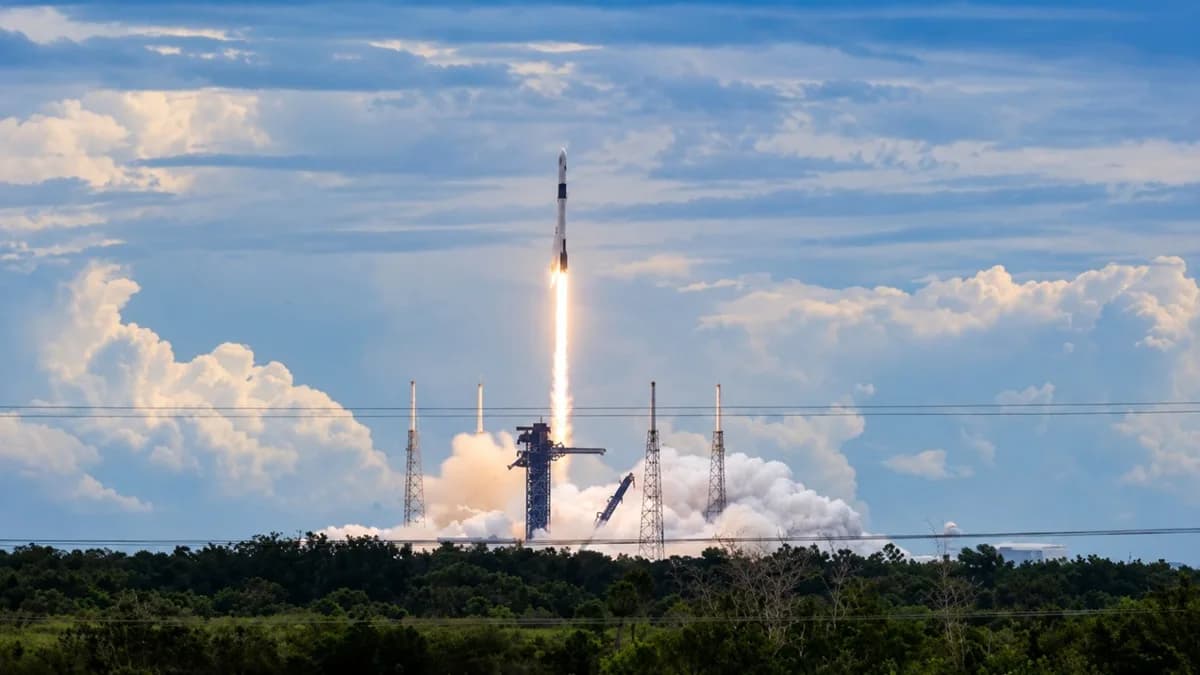
SpaceX Starship Test Flight 15 on Friday, November 13, 2026, was another major milestone in the company’s rocket development program despite a failed booster recovery attempt. The giant rocket lifted off at 4:47 pm local time from Orbital Launch Pad 2 at Starbase in Boca Chica, Texas, on its most ambitious recovery demonstration to date.
The mission was particularly important because it was the first time Elon Musk’s company tried to catch and reuse both the Super Heavy booster and the upper spacecraft stage.
SpaceX Starship Test Flight 15 Faces Booster Recovery Failure
SpaceX cancelled a planned attempt to catch the Super Heavy booster after it took off and instead sent it toward the Gulf of Mexico. Later, the booster splashed down in the water and burst into flames, ending the company’s planned recovery effort.
However, the upper stage continued on its planned trajectory to orbit, showing progress in the spacecraft’s flight operations despite the unsuccessful booster recovery. The upper stage was expected to make some 14 or so orbits of Earth before attempting to return to Starbase on Saturday, Nov. 14.
The Federal Aviation Administration (FAA) earlier Friday gave SpaceX launch authorisation. The agency later declared a nationwide ground stop after communication problems hit several air traffic control centres. The nationwide flight halt did not impact SpaceX’s launch licence or authorisation for the mission, the FAA spokesman told CNBC.
Starship Launch Advances SpaceX's Starlink Expansion Plans
The Starship program is still key to SpaceX’s long-term plans to deliver cargo – and eventually people – to the Moon and Mars. But its near-term commercial significance is growing Starlink, the company’s satellite internet business and its main source of cash flow currently.
SpaceX’s constellation includes more than 11,000 active satellites in low Earth orbit, supporting its growing global internet network. The company said one Starship rocket eventually could carry as many as 60 Starlink V3 satellites into orbit, about 20 times the capacity of earlier Falcon 9 rockets.
SpaceX launched 26 V3 satellites in the previous test flight. The November 13 mission also deployed another 26 satellites, as part of its ongoing deployment program. In a post on X, SpaceX said it had a bigger vision of Starlink accounting for 51% of the internet.
Also Read: Chaitanya Baghel's ₹26.43 Crore Vitthal Greens Project Taken Into ED Possession
SpaceX Faces Questions Over Starshield Restrictions in Ukraine
SpaceX’s military-focused satellite communications service Starshield, which runs on Starlink technology, is gaining new attention over restrictions beyond its launch program. Earlier this week, Ukrainian President Volodymyr Zelenskyy said his country’s military had again faced unexpected limits on Starshield services.
“These limitations impacted the capacity of Ukrainian forces to defend themselves against continuing Russian air strikes,” Zelenskyy said. Similar restrictions had reportedly been temporarily introduced in October. Several United States senators have criticised the restrictions and called for congressional scrutiny of SpaceX's decisions concerning Ukraine's satellite communications infrastructure.
The matter has prompted wider questions about how much influence private satellite companies can wield over military communications, particularly in light of ongoing global conflicts.
Starship's Future Depends on Reusability and Reliability
SpaceX’s most recent mission demonstrated the advances as well as the engineering challenges of building a completely reusable heavy-lift launch system. Analysts at William Blair said SpaceX was probably a decade or more ahead of competitors in launch capability and that a delay of a few months to recover would not materially affect its position.
Other priorities for the company are improving booster recovery, completing upper stage landing demonstrations, and increasing the reliability of repeated launches. The mission underscores the possible effect of Starship development on commercial satellite deployment, international space exploration, and the future of reusable rocket technology for Sprouts News.