SpaceX has completed its 100th mission of 2026, launching 24 Starlink satellites aboard a Falcon 9 from Vandenberg Space Force Base in California. The milestone marks the company’s third consecutive year exceeding 100 missions and highlights the growing role of Starlink in its launch schedule. The Falcon 9’s first stage successfully returned to the drone ship Of Course I Still Love You about 8.5 minutes after liftoff. The mission was the 97th Falcon 9 flight for SpaceX in 2026.
SpaceX 100th Mission of 2026 Sends 24 Starlink Satellites Into Orbit
SpaceX completed 100 missions in 2026, marking its third straight year with more than 100 launches as Starlink continues to drive the company’s launch rate.
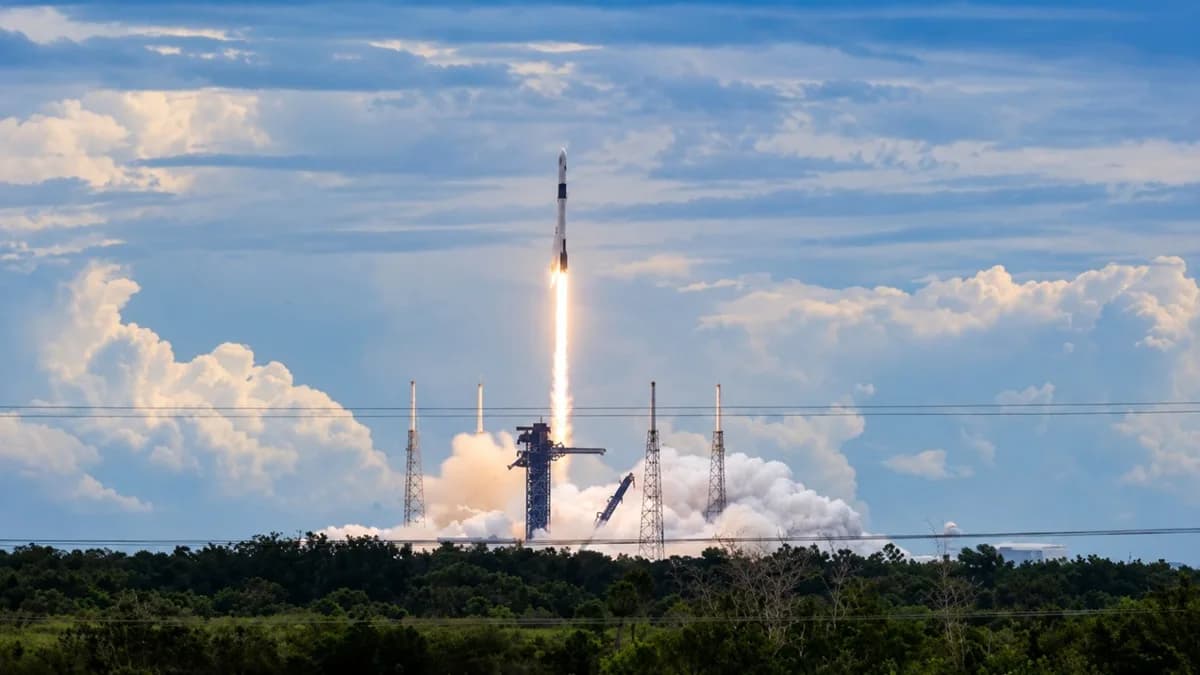
SpaceX has launched 24 Starlink satellites into orbit from California’s Vandenberg Space Force Base on a Falcon 9 rocket, marking its 100th mission of 2026.
The milestone marks the third straight year SpaceX has flown more than 100 launches, demonstrating the company’s accelerating launch cadence and the increasing role of Starlink missions.
The milestone launch took place at 12:01 a.m. EDT (0401 GMT, 9:01 p.m. Tuesday local time in California, United States) on Wednesday, August 19.
The flight marked SpaceX’s 100th mission overall and was the 97th Falcon 9 mission of 2026, according to a report published by Mike Wall for Space.com.
Starlink Mission Marks SpaceX Launch Milestone
The Falcon 9 rocket was carrying 24 Starlink internet satellites to low Earth orbit, with the upper stage scheduled to deploy them about 61.5 minutes after liftoff.
Starlink is a satellite internet constellation being built by SpaceX to bring satellite Internet connectivity to underserved areas on Earth, and to compete for customers in urban areas.
SpaceX said the Falcon 9’s first stage returned some 8.5 minutes after liftoff and landed successfully aboard the Pacific drone ship Of Course I Still Love You.
B1097, the booster used in the latest flight, was on its 12th mission, adding yet another successful reuse of Falcon 9 first-stage hardware on multiple flights.
Based on its flight history and published mission record, B1097 previously flew Sentinel-6B, Twilight, NROL-172, Transporter-17 and seven earlier Starlink missions.
The booster also hit a major milestone during a Starlink mission in April when B1097 achieved what SpaceX called its 600th orbital rocket landing.
Also Read: ED Raids Azam Khan-Linked Jauhar University in UP and Delhi.
SpaceX Continues Expanding Starlink Constellation
SpaceX has spent most of this year launching Starlink, with 74 missions in support of the company's satellite megaconstellation as of the time of the report.
Independent tracking data, Space.com reports, indicates there are close to 11,000 active satellites in the Starlink constellation, highlighting the vast and increasing size of the network's orbital footprint over our planet.
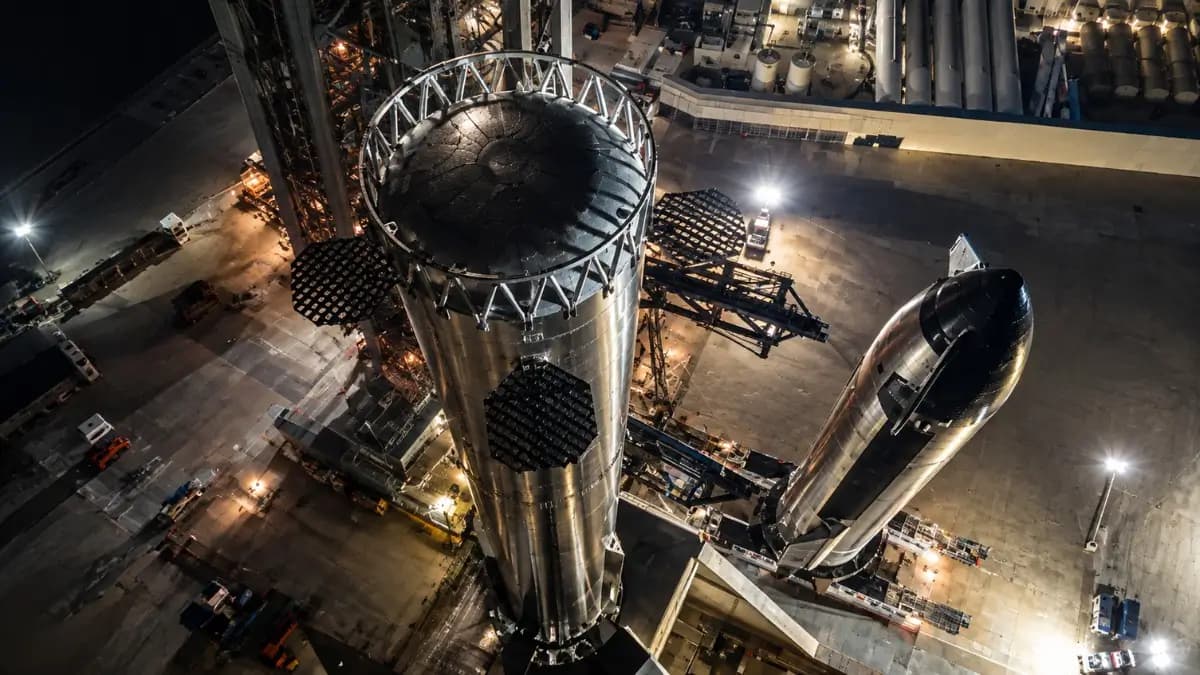
The company’s Falcon 9 launch schedule for 2026 also includes three missions that weren’t Falcon 9 flights, including a Falcon Heavy mission and two Starship test flights.
Starship is being developed as a fully reusable vehicle that will be used for missions to the Moon, Mars, and beyond, while Falcon Heavy remains part of SpaceX’s launch fleet.
From Falcon 9 Records to Starship’s Future
SpaceX broke the 100-launch barrier for the first time in 2024 with 138 missions, including 132 Falcon 9 flights, two Falcon Heavy missions, and four Starship flights.
The report said that by 2025, SpaceX had raised its total number of launches to 170, including 165 Falcon 9 missions and five Starship flights.
The figures reveal the extent to which SpaceX’s current business depends on Falcon 9 and Starlink, and how it is setting itself up for an era of increased Starship launch capacity and activity.
SpaceX founder and CEO Elon Musk has stated the company ultimately wants Starship to fly multiple times a day, possibly boosting annual launches to 1,000.
That long-term strategy would gradually phase Falcon 9 and Falcon Heavy out of the picture, with SpaceX intending for Starship to eventually replace the company’s launch workload.
The latest Starlink mission thus signals both an operational milestone and a preview of SpaceX’s broader strategy, which combines reusable rockets, satellite deployment and increasingly frequent launches.
As SpaceX expands Starlink and increases the pace of launches and Starship testing, Sprouts News will continue to follow developments, and future missions should give further evidence of that transition.