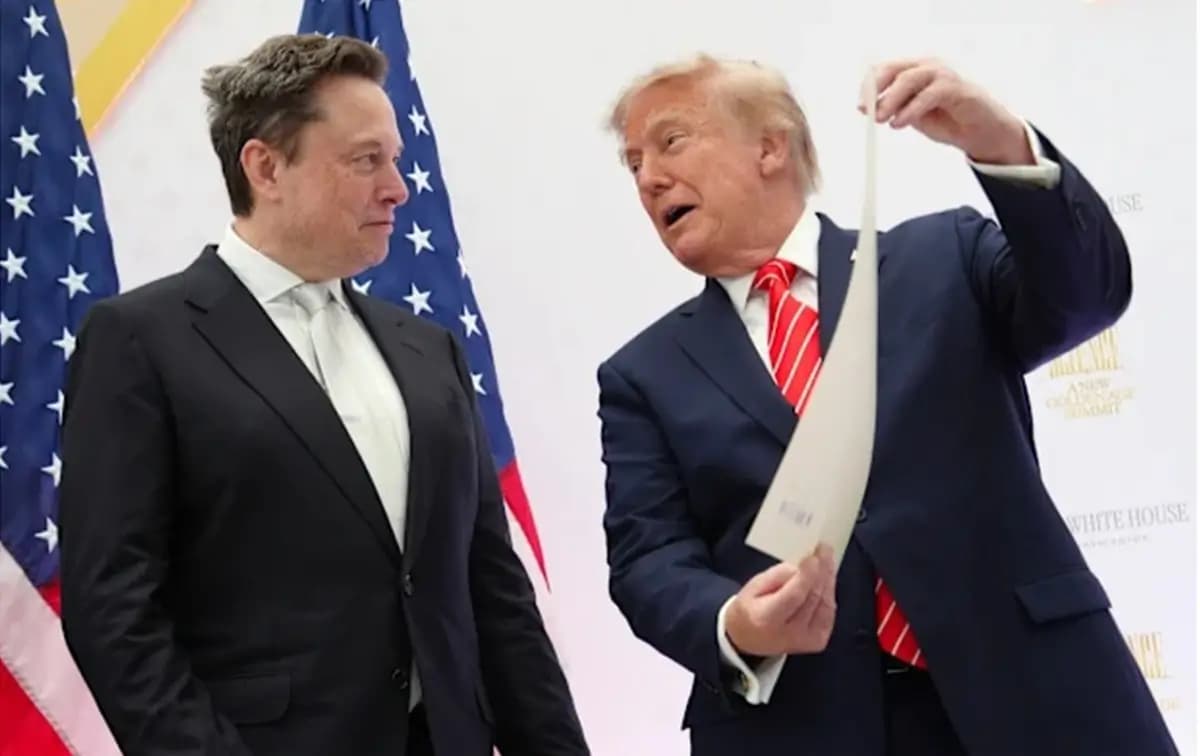
The United States and China have released reciprocal lists covering about $30 billion of goods from each country that could receive more favourable tariff treatment following the Trump-Xi summit. The US list contains 77 categories of Chinese goods, including toys, household products and fireworks, while China’s list covers 1,619 US goods, including agricultural products, timber, coal and medical equipment. The arrangement focuses on non-sensitive products, with China saying more than 90% of covered items would receive most-favoured-nation tariff treatment after required domestic procedures.
US-China Tariff Relief Deal Unveiled After Trump-Xi Summit as Both Nations Target $30 Billion in Trade Relief
The United States and China have released detailed product lists covering about $30 billion of imports from each country, a major move to ease trade tensions after Donald Trump and Xi Jinping met last week at a summit.
The US-China tariff relief deal went ahead after Donald Trump and Xi Jinping agreed to roll back trade barriers on some goods covering some $60 billion in two-way trade. The announcement is one of the most tangible results of Xi Jinping’s recent state visit to Washington.
The proposed relief would cover Chinese exports such as toys, kitchenware, holiday decorations, sporting goods, fireworks and household items. On the US side are agricultural products, coal, seafood, dairy products, grains, timber, medical equipment and other goods.
Most-favoured-nation treatment will apply to about 90% of the covered products, and they won’t be subject to the additional tariffs imposed through years of escalating trade disputes, China’s Commerce Ministry said. The cuts will come after both governments have gone through the necessary legal processes at home.
The deal would help stabilise the two countries' economic and trade relations and create favourable conditions for Chinese exports entering the U.S. market, China's Commerce Ministry said. The ministry also said the two countries had agreed to continue their trade truce through January.
Trump-Xi Trade Framework Expands Through Board of Trade Mechanism
The framework for tariff reductions was negotiated through the Board of Trade, a government-to-government mechanism that was first announced after Donald Trump visited Beijing in May. The framework was introduced following Xi Jinping’s visit to Washington.
The United States proposal includes 77 product categories, whereas China’s list is much wider, with 1,619 product entries. Officials from both governments said the products selected were mainly non-sensitive items that could qualify for preferential tariff treatment.
The deal comes as Washington and Beijing continue to talk on a wider trade deal ahead of two expected meetings between Donald Trump and Xi Jinping later this year. Taiwan and export controls continue to be major points of disagreement.
Lower tariffs on toys, household goods and seasonal products could help dampen prices for American shoppers in the run-up to the year-end holiday shopping season. Improved access to the US market could help Chinese exporters during a period of weak domestic demand.
The details of the deal were welcomed by financial markets. Shares of Chinese appliance makers surged following the announcement, as Joyoung Co. rose by the daily 10% limit in Shenzhen, and Bear Electric Appliance Co. gained as much as 9.5%.
Also Read: India’s TakeMe2Space Targets 2028 Falcon 9 Launch for Data Centre
Economists Assess Economic Impact of US-China Tariff Relief Deal
The $30 billion target is for trade volumes in 2024. In 2024, the US plans to list Chinese products among the $300 billion of imports, with $32.3 billion worth of Chinese imports in 2024 before falling to $23.2 billion in 2025 as tariff disputes rekindled.
China’s proposal targeted US products worth $29.7 billion in 2024 and $19.3 billion in 2025, after Beijing established reciprocal trade measures. Some of that decline is meant to be reversed by the new arrangement.
“The deal showed both the utility and the limits of the new trade framework,” said Chang Shu, chief Asia economist at Bloomberg Economics. The tariff treatment was a gesture of diplomatic goodwill, but the overall impact on the macro economy was still relatively limited, said Chang Shu.
The economist added that the list of non-sensitive goods was very restricted, largely limited to agricultural products and medical devices for US exports and lower-end consumer goods for Chinese exports.
Agricultural Trade and Future Negotiations Remain Key Focus
Notably absent from the tariff relief package were soybeans, even as Beijing separately committed to buying 25 million metric tons annually from the United States until 2028. The move is deemed strategically important by analysts.
"Keeping soybean purchases outside the Board of Trade framework gives Beijing an upper hand in future negotiations, especially in the run-up to US midterm elections," said Feng Chucheng, founding partner of Beijing-based Hutong Research.
The products selected are non-sensitive goods that qualify for favourable tariff treatment, said U.S. Trade Representative Jamieson Greer. The measures would improve market access for US agricultural products and medical devices, and lower barriers for Chinese consumer goods, Jamieson Greer said.
Tariff relief will also be provided on U.S. coal imports, backing China’s earlier commitment to buy at least 10 million metric tons in 2027 and 2028. Other farm products expected to benefit include wheat, corn and sorghum.
After the summit, a new Agricultural Working Group will be established, and its first meeting will take place by the end of 2026, according to China’s Commerce Ministry. Whether this limited tariff relief will evolve into a larger and more permanent US-China trade agreement will be determined in future negotiations, notes Sprouts News.