The US-India trade deal remains under negotiation after Republican losses in the November 3 midterm elections. Analysts told CNBC that President Donald Trump may seek an agreement with India as a policy achievement, potentially around December's G20 summit in Miami. Commerce Minister Piyush Goyal said on November 12 that negotiators had secured favourable outcomes but gave no completion date. Neither government has confirmed a signing, and India says bilateral trade ties are not linked to US domestic politics.
US-India Trade Deal Gains Momentum After Trump’s Midterm Election Setback
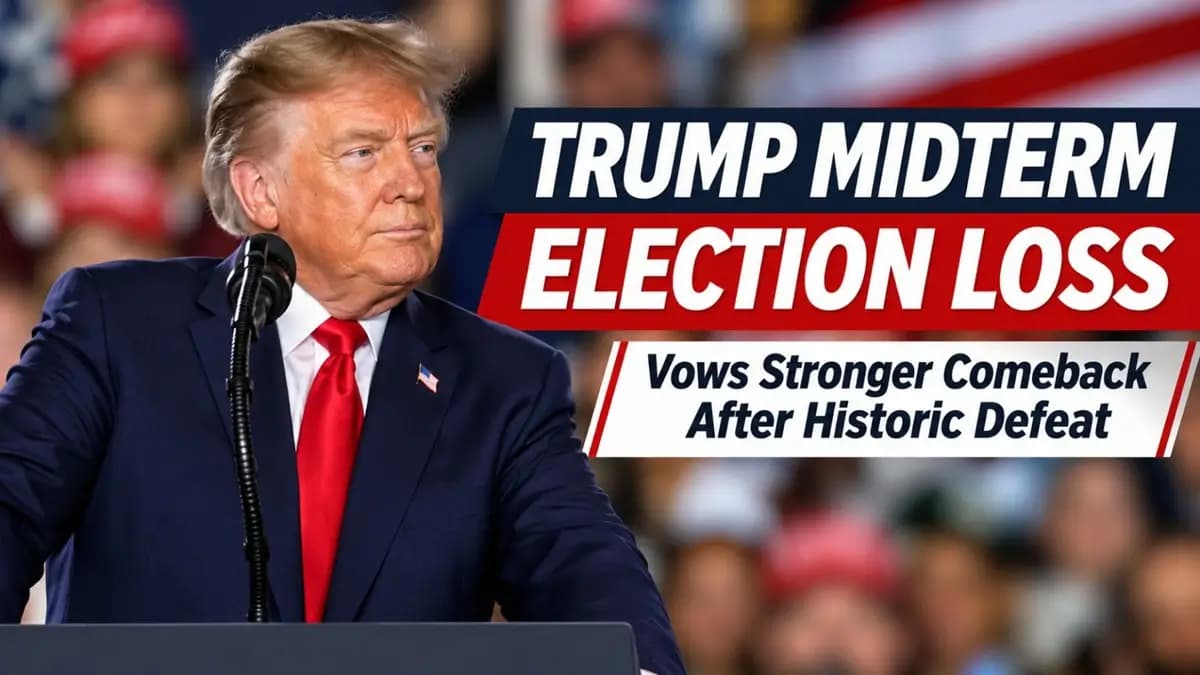
Donald Trump’s midterm election defeat may accelerate efforts to close the long-delayed US-India trade deal, with talks said to be close to wrapping up and December’s G20 summit emerging as a potential signing opportunity.
The US-India trade deal could inch closer to finalisation following US President Donald Trump’s midterm election setback as pressure grows on tariffs and Washington seeks economic policy wins.
Trade experts say Trump may want to point to forthcoming international accords to show progress to American voters, and India is a good candidate for an announcement before the end of 2026.
Negotiations between Washington and New Delhi are moving forward quickly, CNBC said, and experts believe that Prime Minister Narendra Modi and Trump may finalise the deal at the G20 leaders' summit in December.
Trump’s Midterm Election Setback Puts Tariff Policy Under Pressure
The US midterm election results have heightened attention on Trump’s tariff strategy, in particular with Democrats set to challenge the administration’s signature trade policy in Congress.
The cost of living has become a top concern of American voters. Critics argue import duties increase costs for businesses and, in turn, prices for households.
"Negotiations are very far advanced," Mark Linscott, former assistant US trade representative and senior adviser at the US-India Strategic Partnership Forum, told CNBC.
He said the talks were about a gentleman's agreement between Trump and Modi and December could be an opportunity to finalise the agreement.
“Tariffs have become a political hot potato because of the affordability issues,” said Ronak D. Desai, a visiting fellow at Stanford University’s Hoover Institution.
Trump could also announce a trade deal on his own as a policy win, making an India deal more likely after the election results, Desai added.
India-US Trade Negotiations and the December G20 Summit
“Negotiations are very advanced,” Mark Linscott, a former assistant US trade representative, now a senior adviser at the US-India Strategic Partnership Forum, told CNBC.
He said the talks were about a gentleman's agreement between Trump and Modi and December could be an opportunity to finalise the agreement.
“The affordability issues have made tariffs a political hot potato,” said Ronak D. Desai, a visiting fellow at Stanford University’s Hoover Institution.
Desai also said Trump could announce a trade deal on his own as a policy win, making an India deal more likely after the election results.
Talks reportedly stalled in early October, American and Indian officials said. But Trump said on Oct. 20 that negotiations were "pretty close."
Later, Indian media quoted Indian Commerce Minister Piyush Goyal as suggesting that the talks were mostly over.
The December G20 summit could be a good opportunity to formalise the agreement, Aryan D’Rozario, associate fellow and chair on India and Emerging Asia Economics at the Centre for Strategic and International Studies, told CNBC.
Also Read: ED Summons Punjab AAP MLA Amandeep Arora Over ₹1 Crore Highway Compensation Case
American Tariffs and Rising Economic Pressure
The Tax Foundation, a nonprofit group, said the tariffs would add $820 to the average U.S. household’s tax burden in 2026 and $1,000 in 2025.
“Trump may increasingly focus on concluding trade deals as achievements to present to US voters,” Atman Trivedi, partner at Washington-based DGA Albright Stonebridge Group, told CNBC.
The administration also wanted an agreement with India before the December G20 leaders' summit, Trivedi said.
Meanwhile, the Ministry of External Affairs in India said that the bilateral relationship had bipartisan support in the United States. India's commerce and external affairs ministries and the U.S. The Trade Representative's Office did not respond to CNBC's requests for comment.
What the US-India Trade Deal Could Mean for Both Countries
A deal would give more certainty for exporters, businesses and investors facing uncertainty over bilateral tariffs and market access.
Technology and investment opportunities are also part of the broader ties. Separately, JPMorgan estimated that India could get $115 billion in foreign inflows if global investors reduced their underweight positions in Indian equities.
For now, the December G20 summit is more of a potential milestone, rather than a confirmed signing date. Sprouts News shall keep track of the negotiations and developments shaping India-US economic relations.