US commentator Tucker Carlson has alleged that Israeli Prime Minister Benjamin Netanyahu is pressing President Donald Trump to consider a nuclear strike on Iran's underground Pickaxe Mountain facility. Carlson claims the alleged pressure is linked to Netanyahu's political position, but has not provided independently verifiable evidence for the central allegations. Russia and China have opposed renewed military action, while Russian Foreign Minister Sergey Lavrov said Carlson's specific nuclear-strike claim remained unconfirmed. Trump had previously stated that he would not use nuclear weapons against Iran.
Tucker Carlson Warns Trump Could Use Nuclear Weapons Against Iran Amid Netanyahu Pressure
Tucker Carlson has warned that a potential US nuclear strike on Iran could spark a wider conflict, while Russia and China have voiced concerns over renewed military action.
Tucker Carlson’s warning of an Iran nuclear strike has sparked fresh fears of escalating conflict after the US journalist said President Donald Trump could be considering using nuclear weapons against Tehran.
Carlson said Israeli Prime Minister Benjamin Netanyahu was pushing Trump to bomb an Iranian nuclear facility, but his claims have not been independently verified.
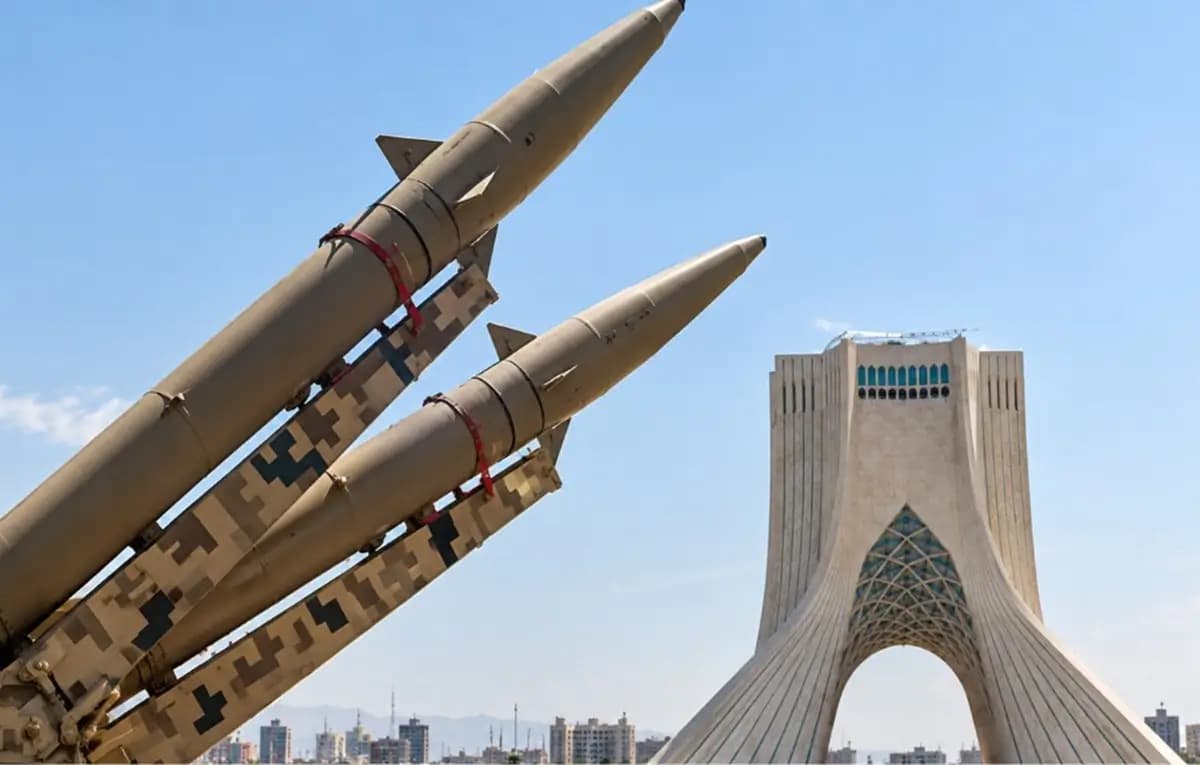
The alleged target was Pickax Mountain in central Iran, the right-wing commentator said, adding that Israeli intelligence believed Tehran had restarted its nuclear enrichment program in underground facilities.
Conventional U.S. weapons, he said, were unable to penetrate some 300 feet of solid granite protecting the tunnels and said a nuclear strike was being considered.
"Carlson said an unnamed informed observer told him that Netanyahu had been in daily contact with Trump, and had been aggressively pushing the nuclear option as the war dragged on.
Tucker Carlson Iran nuclear strike warning and Netanyahu’s alleged pressure
Carlson attributed the reported military pressure on Netanyahu to the domestic political situation in Israel, noting that the prime minister had trouble forming a government without securing 61 seats in the Knesset.
Netanyahu needed Trump to broker a deal with other parties, he said, warning that if he lost office he could face investigations and possible jail time.
Carlson named US Defence Secretary Pete Hegseth and CENTCOM commander Brad Cooper as Netanyahu’s closest allies in the administration, saying both were against attempts to find a negotiated settlement.
He also named Secretary of State Marco Rubio, CIA Director John Ratcliffe and Democratic Party leaders, claiming that they were in line with Netanyahu’s position on continuing military operations.
Carlson also claimed former President Barack Obama was opposed to a peace proposal for Iran being drafted in Doha, a claim not independently verified.
Allies in the Middle East feared that the situation would get worse, he said, adding that Netanyahu secretly went to Abu Dhabi on September 27 to seek UAE backing for another attack.
Carlson reported that the United Arab Emirates refused to join the lobbying push and cautioned that continued fighting could worsen economic turmoil.
Global risks and warnings over nuclear escalation
Carlson said more military action could speed economic damage, pointing to disruption to Gulf economies, international energy supplies and fertiliser markets.
He said 11 of some 850 oil supertankers worldwide were badly damaged in the Strait of Hormuz in October, stoking concerns about energy transit.
A ground-level nuclear blast at Pickax Mountain could contaminate the Persian Gulf and endanger drinking water for 100 million people, he warned.
“If you use nuclear weapons against Iran, you are setting a precedent in other conflicts, Russia-Ukraine, India-Pakistan, North Korea-South Korea,” Carlson said.
He said Russia had warned at least two governments that a US nuclear strike could justify the use of nuclear weapons against Ukraine.
Carlson warned of dire consequences, saying a first nuclear strike could trigger a wider world war, but his prediction is an unverified assessment.
He also said Washington had quietly revised its nuclear doctrine since February to make battlefield nuclear weapons more likely, without providing publicly verifiable evidence.
Citing people he said were close to Trump, Carlson said the president may decide by next weekend whether to use nuclear weapons.
Carlson said Trump was listening to Vice President JD Vance and envoy Steve Witkoff, whom Carlson described as favouring a negotiated agreement with Iran.
Also Read: Maharashtra Minister Claims World Record as Innovation Challenge Crosses 1 Lakh Registrations
US lawmakers question military escalation as diplomacy continues
US Senator Chris Murphy said lawmakers were briefed on plans that could see military operations restarted, calling it a dangerously escalatory approach.
Murphy warned the plan could have dire consequences and undermine the U.S. commitment to the rule of law.
Meanwhile, Iran's Foreign Ministry spokesman Esmaeil Baghaei said diplomatic exchanges with Washington are continuing through mediators, although without any breakthrough.
Iran's seven-step proposal, first submitted in September, remained the basis for talks but had been streamlined for possible implementation within two days, Baghaei said.
The proposal asks for Washington to end its blockade of Iranian ports, Tehran to open the Strait of Hormuz and the United States to waive restrictions on Iranian oil sales.
It also calls for the lifting of new sanctions and then talks on other issues; Trump rejected the original proposal in September.
Baghaei said Iran would not resume talks on its nuclear program until its conditions were verified and denied that the transfer of its stockpile of highly enriched uranium abroad had been discussed.
Negotiators from Iran left Sunday without talks breaking down, an official briefed on the negotiations said, adding that a draft proposal was circulating.
Russia and China call for diplomacy over Iran
Russia said on Monday it was "extremely concerned" by reports of possible renewed military action against Tehran and called for greater diplomatic efforts to ease regional tensions.
Iranian state media said senior security official Mohsen Rezaei had spoken to Russian President Vladimir Putin by phone about developments in the Middle East.
Chinese Foreign Minister Wang Yi urged all parties to prioritise political solutions in talks in Beijing with Iran's senior security official Ali Bagheri Kani.
Talks are ongoing, but no agreement has been reached, and the prospect of further military action remains a big worry for the governments of the region and the international markets.
As the conflict enters its next phase with more diplomatic exchanges, decisions in Washington and responses from Tehran will be considered; governments will consider the implications of escalation.