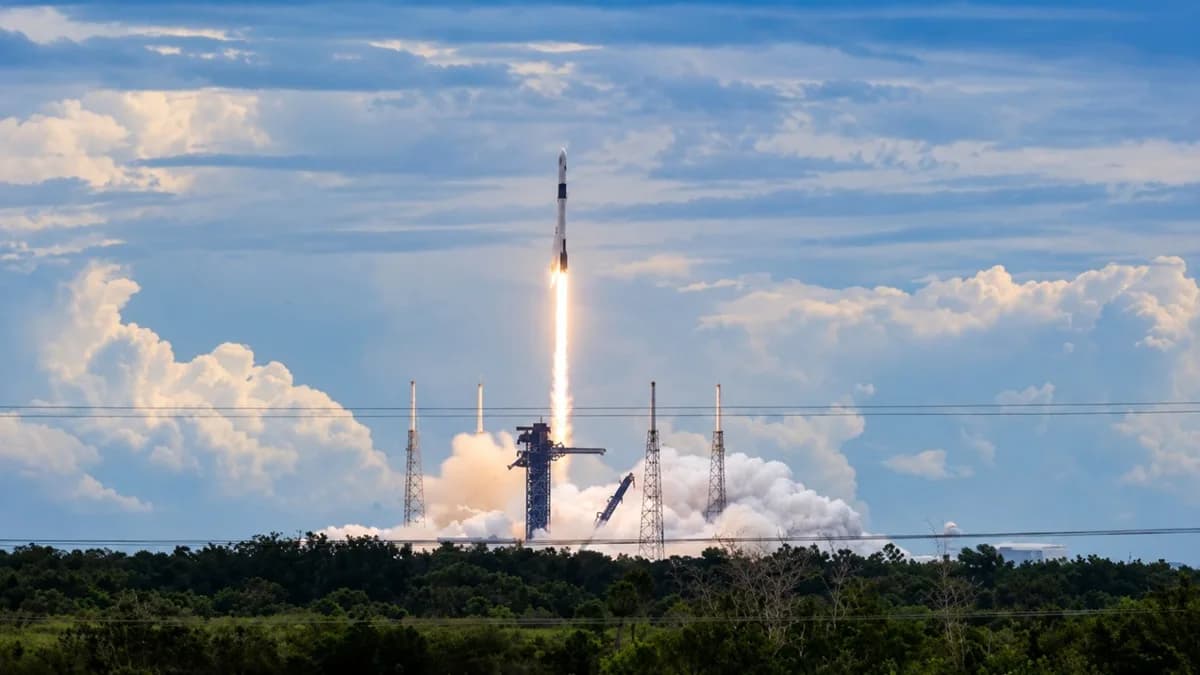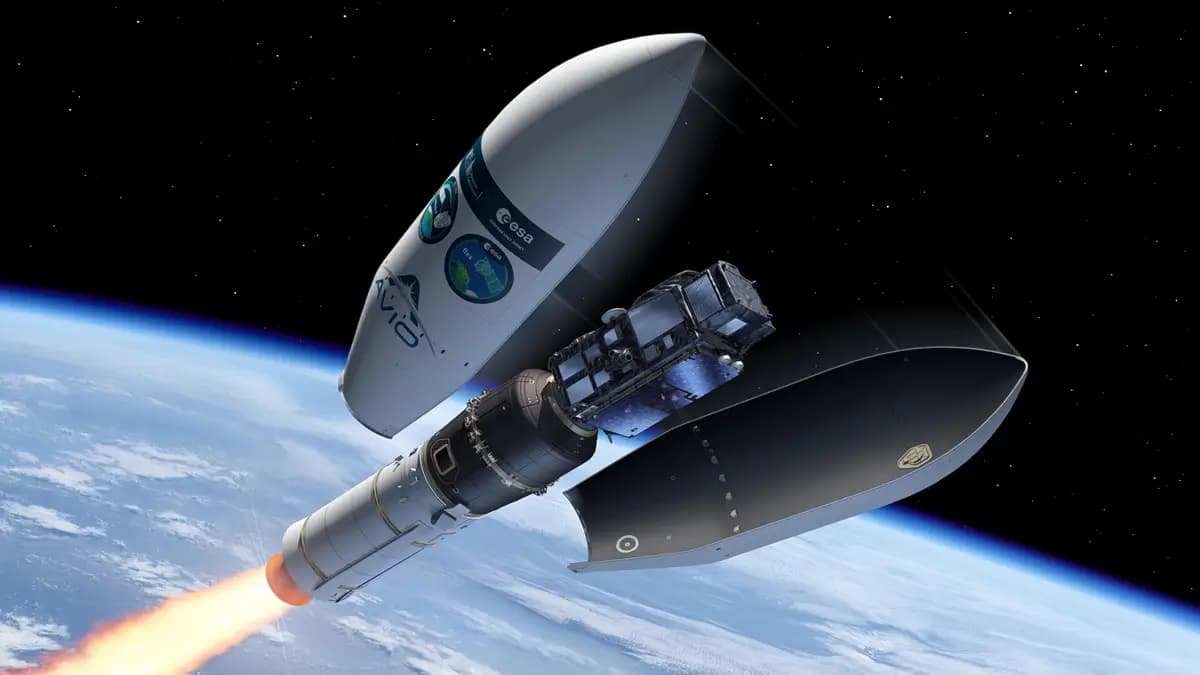
ISRO successfully launched the GSLV-F17 carrying EOS-05 into its designated sub-geosynchronous transfer orbit from Sriharikota early Friday. Prime Minister Narendra Modi congratulated ISRO, describing the mission as a significant achievement in India’s space and Earth observation capabilities. EOS-05 is designed to provide near-real-time imagery using visible, infrared, multispectral and hyperspectral bands. ISRO officials said the satellite was accurately injected into its intended orbit, marking another milestone for the GSLV program and India’s operational space technology ambitions.
GSLV-F17 Launch: PM Modi Hails ISRO Success as EOS-05 Reaches Orbit
Prime Minister Narendra Modi congratulated ISRO on the successful launch of GSLV-F17 with EOS-05 and said India is moving forward rapidly in space technology and Earth observation.
Prime Minister Narendra Modi congratulated the nation on the successful launch of the GSLV-F17 rocket, which carried the EOS-05 Earth observation satellite into its designated sub-geosynchronous transfer orbit on Friday.
The GSLV-F17 launched on a pre-dawn mission at 2:55 am IST from the Satish Dhawan Space Center at Sriharikota in Andhra Pradesh.
India’s successful mission was a proud moment, said Modi, and ISRO has been making strides in innovation and technological capabilities.
Referring to EOS-05 as the first-ever imaging satellite of India to operate from geosynchronous orbit, Modi said in a post on X that the mission showcased ISRO’s excellence.
The Prime Minister also said the growing partnership between ISRO and Indian industry was strengthening the country’s space program and expanding capabilities across the larger space ecosystem.
GSLV-F17 Launch Marks Major Earth Observation Milestone
The GSLV-F17 mission is a significant milestone for India’s Earth observation program, and EOS-05 is expected to have advanced imaging and observation capabilities from space.
EOS-05, they said, can provide near-real-time imagery through visible, infrared, multispectral and hyperspectral bands that will be useful for a variety of Earth observation applications.
ISRO Chairman Dr V Narayanan said he was happy with the mission and the GSLV-F17 had accurately injected the advanced satellite into the intended orbit.
The launch was a major milestone for the GSLV program,m and the mission was the 19th flight of the launch vehicle, said Mission Director Thomas Kurian.
“EOS-05 was specifically designed for Earth observation and could provide near real-time imaging," Kurian said, calling the satellite an important milestone for India’s operational space program.
He also noted that EOS-05 is the heaviest satellite to be launched by GSLV into a geosynchronous transfer or sub-GTO orbit.
The outcome was due to extensive preparation and the dedicated work of scientists, engineers and the teams involved in the entire mission’s development and launch process, Kurian said.
Also Read: Trump Calls Iran Conflict ‘Small Potatoes,’ Hints at Pickaxe Strike.
EOS-05 Adds New Capacity to India’s Space Programme
The EOS-05 mission is expected to enhance India’s Earth Observation capabilities by providing a continuous view of the country from about 36,000 kilometers above the Earth.
Its imaging systems should be able to satisfy advanced observation requirements in several spectral bands, thus increasing the type of information available for applications using satellite-based imagery.
The successful launch also underscores the GSLV programme's role in launching heavier payloads into higher orbits, a critical capability for India's burgeoning space aspirations.
The GSLV-F17 launch vehicle stands 51.7 meters tall and had an approximate liftoff mass of 420.5 tons, highlighting the scale of the operational launch system.
Union Minister for Science and Technology Jitendra Singh also congratulated the team behind the successful mission and said India’s space program continued to scale new heights of glory and reinforce the country’s stature as a major global space power.
Describing EOS-05 as a state-of-the-art Earth observation satellite, Singh underscored its capability of performing advanced imaging using visible, infrared, multispectral and hyperspectral capabilities.
What the Successful Mission Means for India
The launch follows India’s continued expansion of both its government-led space program and collaboration with domestic industry across launch systems, satellites and associated technologies.
The successful GSLV-F17 mission is yet another demonstration by ISRO of its capability to deploy increasingly capable Earth observation satellites into difficult orbital configurations.
The mission also underscores the growing importance of collaboration between public institutions, scientists, engineers, and the private sector for the larger Indian space ecosystem.
The successful launch of EOS-05 is another step in India’s efforts to develop its own capabilities for Earth observation and space technology.
The next phase will concentrate on the satellite’s operations and the imagery and data it produces, as ISRO continues to develop future missions and expand the national space infrastructure.
Friday’s launch of EOS-05 into its intended orbit is another major milestone in India’s ongoing space program, demonstrating the growing sophistication of its satellite capabilities.