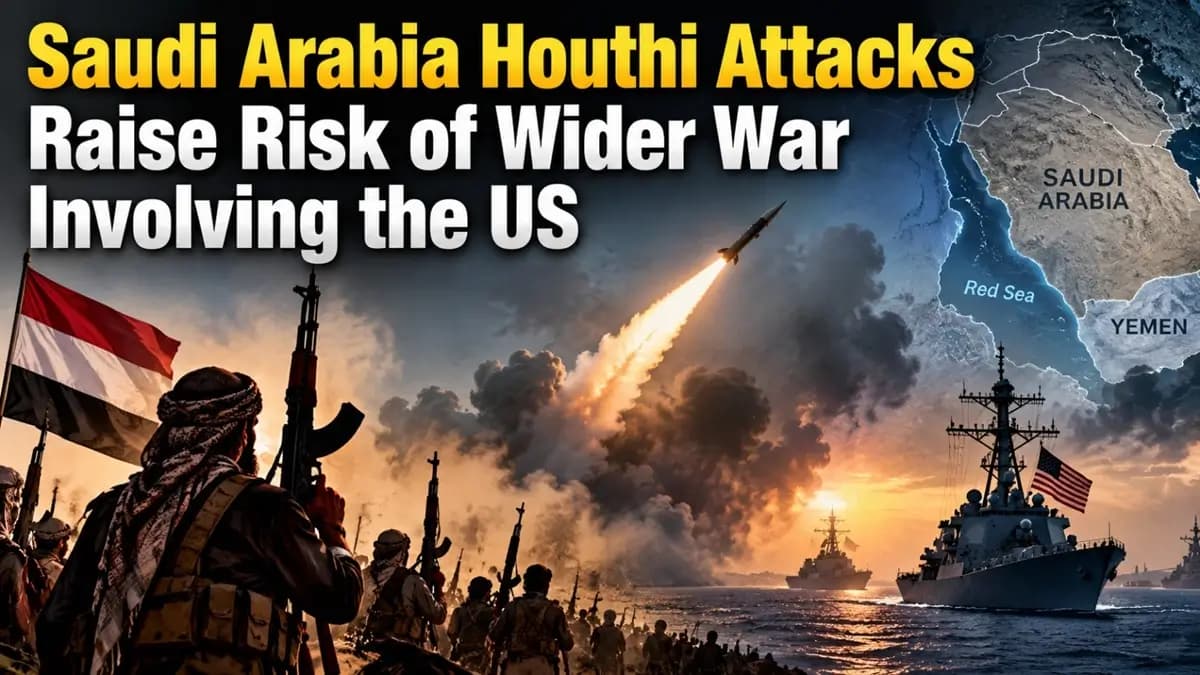
Saudi Crown Prince Mohammed bin Salman reportedly urged US President Donald Trump to order strikes against Yemen’s Houthi forces as they advanced toward the Bab el-Mandeb Strait, Axios reported, citing US officials. According to the report, MBS spoke with Trump twice as Saudi-backed Yemeni government forces retreated. Trump reportedly declined direct US intervention, with Washington instead indicating it would provide intelligence and targeting assistance. The developments have renewed concerns over security around the Red Sea shipping route and its potential impact on global trade.
Saudi Crown Prince Reportedly Urged Trump to Strike Houthis as US Declined Direct Intervention
Saudi Crown Prince Mohammed bin Salman reportedly asked US President Donald Trump to order strikes on Houthi forces after the group advanced near the strategic Bab el-Mandeb Strait.
Saudi Crown Prince Mohammed bin Salman asked US President Donald Trump to attack Yemen’s Houthi forces but Trump declined, Axios reported.
MBS, as Mohammed bin Salman is better known, called Trump twice as Houthi forces advanced toward the strategically important Red Sea shipping route, the report said, citing US officials.
MBS called Trump on Thursday to brief him on worsening conditions after Houthi forces advanced toward Mokha, officials told Axios.
The Houthis were making progress, and Saudi-backed Yemeni government forces reportedly retreated, causing MBS to call again several hours later.
In that second exchange, MBS allegedly told Trump to order US strikes against Houthi positions. Trump refused, officials quoted in the report said.
Instead, the Trump administration has indicated that Washington will be providing Saudi Arabia with intelligence and targeting information on the Houthi forces.
US strategy focuses on Red Sea security
A senior Trump administration official told a report that Washington's immediate priority was to maintain freedom of navigation in the Red Sea rather than getting directly involved in the wider conflict.
"We are focused on our core national security interests, but also on empowering our regional partners to manage and resolve broader security challenges," the official said.
The official quoted by Axios said Washington also had been in constant talks with Saudi Arabia and the internationally recognised Yemen government on regional stability.
The decision comes as renewed fighting between Iran-aligned Houthis and Saudi-backed Yemeni government forces puts pressure on a crucial international maritime corridor.
Mokha is a historic Red Sea port in western Yemen about 80 kilometres from the Bab el-Mandeb Strait, the report said.
The strait links the Red Sea to the Gulf of Aden and carries around 12% of all goods transported globally by international sea routes.
Also Read: ED Raids 9 Locations in Ramnandi Hotels Rs 132-Crore Bank Fraud Case
Houthi advance raises concerns over Bab el-Mandeb
Houthi forces had driven Saudi-backed government troops south toward Dhubab, across from Perim Island, two Yemeni government sources told Axios.
The developments could take Houthi forces closer to the entrance to the Bab el-Mandeb Strait, possibly raising risks for commercial vessels transiting the waterway.
The strait is strategically important for more than just Yemen and Saudi Arabia, as any major disruption there could affect shipping schedules, insurance costs, energy markets and international supply chains.
The latest developments also represent an escalation from the Houthis’ previous position after the start of the Iran war, when the group largely stayed out of the fray.
But during the summer the Houthis reportedly stepped up attacks on Yemen's internationally recognised government and declared a blockade on Saudi Arabia.
Iran, Saudi Arabia and wider regional tensions
The Houthis have their own reasons for opposing Saudi Arabia, which has backed Yemen’s internationally recognised government during the prolonged conflict.
At the same time, the group’s showdown with Riyadh could serve broader Iranian interests by pressuring Saudi Arabia, a key oil-producing state aligned with the United States.
The conversation between MBS and Trump, as reported, illustrates Washington’s current inclination to support regional partners without becoming directly embroiled in another huge military operation.
The reported US approach could leave Saudi Arabia with more responsibility for confronting the Houthi advance while receiving American intelligence and targeting assistance.
This will depend on the military moves of the Houthis, the response of Saudi Arabia and whether there are more attacks or threats to Red Sea shipping.
Any prolonged escalation around Bab el-Mandeb is likely to attract renewed international attention because of the waterway’s importance to global commerce and regional security.
For now, the reported refusal by Trump to authorise direct US strikes suggests Washington is prioritising maritime security while leaving the broader military confrontation primarily to regional actors.