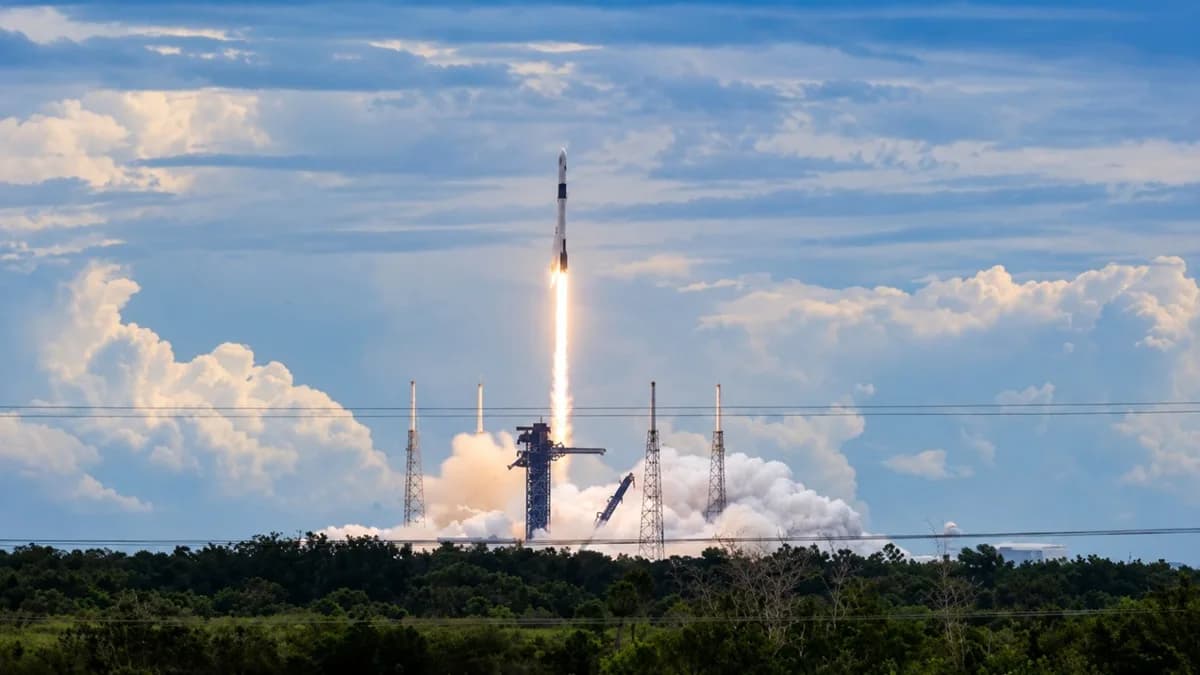
NASA and SpaceX have postponed the Crew-13 mission to the International Space Station after engineers detected an oxidizer leak in the Dragon spacecraft’s propulsion system. Technical teams are conducting inspections and reviewing data to determine the source of the anomaly and its impact on flight readiness. No new launch date has been announced. The delay reflects the safety protocols applied to crewed spaceflight, where propulsion-system irregularities can require extensive testing and corrective work before a spacecraft receives clearance to fly.
NASA and SpaceX Delay Crew-13 ISS Mission After Dragon Spacecraft Leak Investigation
NASA and SpaceX have postponed the Crew-13 flight to the International Space Station after engineers discovered an oxidizer leak in the Dragon spacecraft’s propulsion system, which requires additional safety checks.
NASA and SpaceX delayed the Crew-13 mission to the International Space Station after detecting a leak in the Dragon spacecraft propulsion system’s oxidizer. It was decided to give the engineers more time to investigate the problem and fix it before launch.
The postponement concerns a mission to transport astronauts to the International Space Station in support of NASA and SpaceX’s ongoing partnership under the agency’s commercial crew program. Teams are assessing the spacecraft, but safety comes first.
The leak was in the propulsion system of the Dragon spacecraft, Bloomberg reported Aug. 31, 2026. Engineers are doing detailed inspections to find out why and if there’s any impact on mission readiness.
The delays highlight the strict safety procedures NASA and SpaceX conduct, especially for crewed missions, including extensive testing of spacecraft systems before they are cleared to fly.
Dragon Spacecraft Leak Prompts Additional Technical Reviews
The Dragon spacecraft is a critical part of NASA’s plan to launch astronauts into space, and routinely transport crew and cargo to and from the International Space Station. The propulsion system is key to the maneuver, docking, and safe operation of the mission.
Oxidizers are an important part of spacecraft propulsion systems, and an oxidizer leak can be a hazard to operations. Small irregularities can require a lot of engineering review to ensure vehicle safety and reliability before launch activities can begin.
Officials have not said publicly where the leak was or when the new launch will be. Technical teams are meanwhile collecting data, performing inspections and taking any corrective action that may be necessary.
Mission teams said the launch will stay on hold until engineers complete evaluations and confirm all spacecraft systems meet required safety standards before resuming flight operations.
The move is in keeping with protocols built into human spaceflight programs that have changed schedules when technical problems have occurred in the past. These kinds of delays are not uncommon when engineers discover anomalies that require further investigation.
Also Read: Kolkata Messi Event Refund Announced for 33,000 Affected Spectators.
Related News: NASA Roman Telescope Cleared for SpaceX Falcon Heavy Launch Mission.
NASA and SpaceX Continue Focus on Crew Safety
Since the beginning of the Commercial Crew Program, NASA and SpaceX have completed a number of successful crew transportation missions. The partnership has become critical in providing a continuous human presence on the International Space Station.
International Space Station: One of the world’s most important scientific laboratories, it hosts experiments in medicine, technology, Earth observations, and long-duration human spaceflight. Station operations require reliable transportation systems.
Delays stemming from technical issues are generally seen by industry observers as precautionary rather than indicative of larger program issues. Aerospace agencies and commercial operators usually prefer safety over launch schedules.
Mission managers continue to evaluate the Dragon spacecraft and work on a safe solution to the propulsion system problem, Bloomberg reported. Any future launch opportunity will depend on the results of engineering reviews.
Sprouts News understands NASA and SpaceX will be releasing further updates once inspections are complete and a revised timeline is available. Teams are working to fix the spacecraft leak, so Crew-13 will remain on the ground until then.
The latest development underscores the complex nature of human spaceflight and the need for rigorous safety oversight. For NASA, SpaceX, and International Space Station operations, the deciding factor in setting the next launch date for the mission is astronaut safety.